
Memory infrastructure for agentic systems
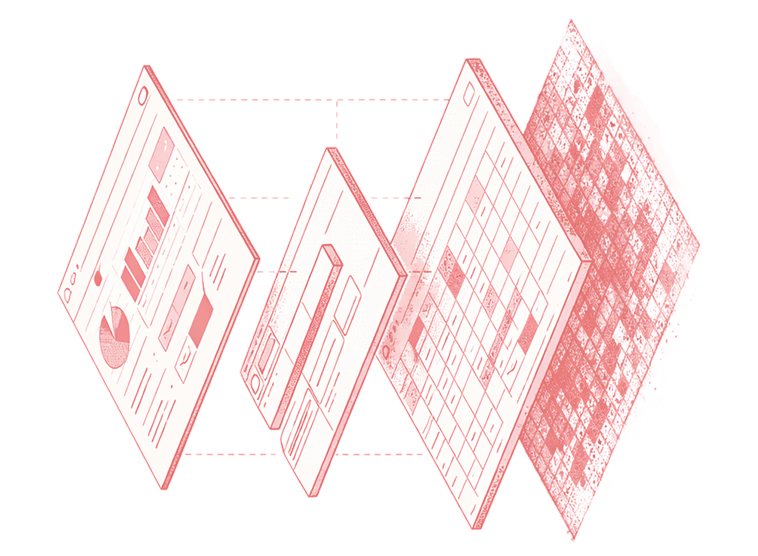
Gekit helps agents access the right context instantly by organizing fragmented information into a structured memory layer.


Memory infrastructure for agentic systems
Gekit helps agents access the right context instantly by organizing fragmented information into a structured memory layer.
[00] BUILT BY EXPERTS FROM


[01] HOW IT WORKS
[01.1]
Agents are only as fast as their context.
Most AI systems still assemble context at runtime, pulling from scattered databases, human inputs, APIs, and prior outputs before they can respond.
That process adds latency, complexity, and inconsistency to every interaction.

[01.1]
Agents are only as fast as their context.
Most AI systems still assemble context at runtime, pulling from scattered databases, human inputs, APIs, and prior outputs before they can respond.
That process adds latency, complexity, and inconsistency to every interaction.

[01.1]
Agents are only as fast as their context.
Most AI systems still assemble context at runtime, pulling from scattered databases, human inputs, APIs, and prior outputs before they can respond.
That process adds latency, complexity, and inconsistency to every interaction.

[01.2]
Context today is fragmented.
Critical knowledge lives across too many places: internal systems, semantic notes, prior agent runs, and human decisions.
Without a unified memory layer, agents spend valuable time retrieving, interpreting, and reconciling what they need before they can act.


[01.2]
Context today is fragmented.
Critical knowledge lives across too many places: internal systems, semantic notes, prior agent runs, and human decisions.
Without a unified memory layer, agents spend valuable time retrieving, interpreting, and reconciling what they need before they can act.

[01.3]
Gekit creates a memory layer for agents.
Gekit organizes context into a structured system that agents can access immediately.
By preparing and indexing relevant information ahead of time, it becomes easier for agents to retrieve what matters, maintain continuity, and generate stronger responses.


[01.3]
Gekit creates a memory layer for agents.
Gekit organizes context into a structured system that agents can access immediately.
By preparing and indexing relevant information ahead of time, it becomes easier for agents to retrieve what matters, maintain continuity, and generate stronger responses.

Gekit is the Memory Layer for Low-Latency AI Agents
[02] MEET THE TEAM
[03] WHY GEKIT

A unified memory layer for AI agents
Gekit organizes context from systems, humans, and prior agent outputs into a structured memory layer accessible within the agent loop. By preparing and resolving this context ahead of time, agents can respond instantly with the right information.


A unified memory layer for AI agents
Gekit organizes context from systems, humans, and prior agent outputs into a structured memory layer accessible within the agent loop. By preparing and resolving this context ahead of time, agents can respond instantly with the right information.


A unified memory layer for AI agents
Gekit organizes context from systems, humans, and prior agent outputs into a structured memory layer accessible within the agent loop. By preparing and resolving this context ahead of time, agents can respond instantly with the right information.


Ready to accelerate your agents?
Join leading AI engineering teams who use Gekit to build fast, reliable, and
production-ready agentic applications.
Ready to accelerate your agents?
Join leading AI engineering teams who use Gekit to build fast, reliable, and
production-ready agentic applications.